

The New Saint Convent in Moscow, Russia
Located in Moscow, Russia, it is an Orthodox women's monastery and one of the most famous and important religious buildings in Moscow. Built in the 16th century, its name comes from the statue of the Virgin Mary enshrined in the monastery, which is said to have had miracles and is therefore revered as the "New Holy Maiden". It is not only a place for religious activities, but also a symbol of Russian history and culture. It was once a cemetery for the Tsar family, where many tsars and their family members were buried. The architectural style and interior decoration reflect the essence of traditional Russian religious art, and its exquisite murals and icons have high artistic value. Understand Russian religious culture and history.
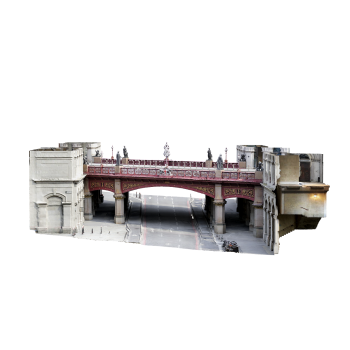
Holborn Viaduct, London, UK
A historic bridge located in London, built between 1863 and 1869 and designed by engineer William Heywood, was one of the most ambitious and costly engineering projects of its time. Not only does it connect Holborn and Newgate Street, but it also spans Farringdon Street and the underground Fleet River. 1400 feet long and 80 feet wide, made of cast iron, supported on granite columns. Design and construction were considered engineering feats at the time, not only improving the city's traffic flow, but also an important symbol of modern Victorian era London. It is also considered by some to be the world's first overpass.
Harichavank Monastery, Armenia
A medieval monastery in the VayotsDzor region of Armenia, located on a hillside in Harich village, overlooking magnificent natural scenery. Built in the 7th century and undergoing centuries of reconstruction and expansion, it has become an important witness to Armenian Christian culture and religious heritage. Renowned for its exquisite architecture and carvings, including the Church of Saint Gregory and the Church of Saint Astartesin, as well as complex reliefs adorned with cross shaped stone tablets. Not only does it showcase the evolution of Armenian church architecture, but it also reflects the influence of different cultural periods.
VeraCruz Church in Segovia, Spain
A historic religious building located in Segovia, Spain, dating back to the 13th century. Renowned for its unique twelve sided design and Romanesque style, it is considered one of the best preserved churches of its kind in Europe. It is believed to have been built by the Knights Templar, but there has been controversy over the true identity of its builders, with some historians suggesting that it may have been built by the Knights of the Holy Sepulchre in Jerusalem. The design inspiration comes from the Holy Sepulchre Church in Jerusalem, whose architectural style and symbolic significance are deeply rooted in religious traditions and history. It is an important historical site in Segovia.
San Lorenzo Gate, Laredo, Spain
An ancient city gate located in Laredo, Cantabria Autonomous Community, Spain. As an important historical site in the city of Laredo, the San Lorenzo Gate witnesses the rich historical and cultural heritage of the region. Laredo city is located near the Atlantic Ocean and has a beautiful coastline, making it a scenic tourist destination. The San Lorenzo Gate is not only a part of the city's defense system, but also a legacy of medieval urban structures, providing visitors with a window to glimpse past history and architectural art.
The porch of Leyre Monastery in Navarre, Spain
A magnificent 12th century porch located in the Leyre Monastery in Navarre, Spain, is one of the important features of the monastery. Known for its complex architectural structure and narrative of biblical stories, it is an outstanding representative of Romanesque art. The design is very exquisite, decorated with columns and capitals of St. Peter, Our Lady, and the Apostles, as well as intertwined bird necks. These details were handmade by the master Esteban, who is also the author of the Plater í as Gate in Santiago de Compostela. Not only is it the public entrance of the monastery, but it is also a necessary path leading to the church.
Lycolette Monastery, Belgium
Nivelle, located in the Walloon region of Belgium. This monastery has rich historical and cultural heritage value and is an important landmark in the city of Nivelle. Built in the mid-13th century, it was created by the Franciscan monk Leclert. The monastery is adjacent to the Church of St. John and Nicholas in Neverle, which is sometimes also known as the Leclert Church. The courtyard is not only a religious building, but also a center for community life and education, which is of great significance to local residents. The protection and reuse of monasteries have always been a focus of attention for local governments and cultural conservation organizations, aiming to preserve and highlight their historical and architectural value.
Romanesque period peace church
It is a religious building with a long history, and its exact construction date is unknown, but it is known to have existed during the Romanesque period. It consists of a narrow nave and a rectangular choir. In the second half of the 14th century, the church underwent expansion, adding a west tower and two side aisles. In the early 15th century, a Gothic choir was added. Unfortunately, the Hussite attack in 1427 resulted in severe damage to the nave, which was later demolished and rebuilt in the second half of the 15th century. Despite experiencing vicissitudes, it remains an important relic for studying medieval religious architecture and regional history. People can learn about the history and cultural value of this church.
Eastern Avenue Sewage Treatment Pumping Station in Baltimore, USA
An important municipal facility located in Baltimore, Maryland, United States. Built in 1912, it was a key component of Baltimore's new sewer system at the time. Designed by architect Henry Brauns and chief engineer Calvin Hendricks, the exterior design of the pump station incorporates classical elements. By 1959, the pump station underwent modernization and was replaced with one diesel pump and five electric pumps, which are still in operation today. Although the museum was closed in 2011 due to budget issues, the Eastern Avenue pumping station continued to provide necessary services to Baltimore citizens around the clock.
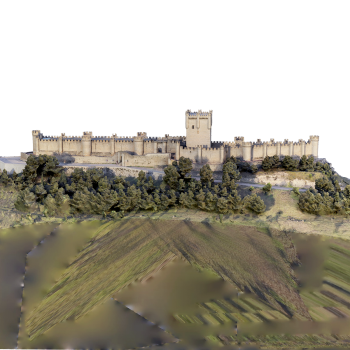
Pe ñ afel Castle, Spain
A historic castle located in Valladolid Province, Castile and Le ó n Autonomous Community, Spain, and one of the most famous landmarks in the region. The history can be traced back to the 10th century, but its current form is mainly the result of important renovations in the 14th and 15th centuries. In 1917, Pe ñ afel Castle was declared a national monument and became a cultural symbol of the wine route along the banks of the Duero River. Built on a highland near the Douro River, its unique ship design adapts to the needs of the terrain, making it strategically important.
Nepal Patan Palace Courtyard Fountain
A historic fountain located in the center of the Patan Palace courtyard in Nepal. It is believed to have been commissioned by King Siddhi Narasimha Malla of Patan in 1628. Not only is it a beautiful building, but its design and decoration reflect the society's emphasis and worship of water at that time. The courtyard was damaged in earthquakes in 1934 and 2015, but fortunately, the fountain itself was almost undamaged as the upper floors collapsed outward. Subsequently, through the efforts of the Kathmandu Valley Conservation Trust, the fountain and courtyard were fully restored.
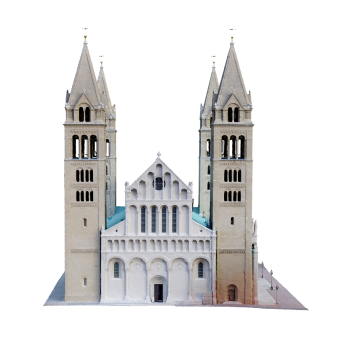
St. Peter and St. Paul's Basilica in P é cs, Hungary
It is the main church and Catholic church in the city of P é cs, Hungary. The history can be traced back to the 11th century, and its existing appearance was mainly reconstructed in the late 19th century based on the design of Frigyes Schmidt. Known for its Neo Romanesque style and four towers, its foundation can be traced back to the ancient Roman period. Not only is it the center of religious beliefs, but it is also a cultural symbol and important historical site of the city of P é cs. It was granted the status of a small temple in 1991 and underwent renovation before Pope John Paul II's visit to Hungary.
Chambord Castle Courtyard, France
It is one of the most famous castles in the Loire Valley region of France. Located in the central region of France, it is renowned for its grand scale and unique French Renaissance architectural style. Ordered by King Francis I of France, it was first built in 1519 and continuously expanded and renovated in the following centuries. Nowadays, the Ch â teau de Chambord is open to the public as a museum, attracting thousands of visitors every year. The courtyard often hosts various cultural events, such as concerts and theatrical performances, keeping this historic castle active in contemporary cultural life.
Museum of Bourgogne Culture in France

Located in Bourges, France, it is a building of significant historical and cultural value. Built in the early 16th century, it is an outstanding representative of the early French Renaissance style. Built by the Lallemant family, they not only held important positions in municipal and financial affairs, but also had close connections with the art circle at that time. Located on the Gallic Roman city wall, its unique position creates a sloping passage design that connects the upper entrance to the lower courtyard. Nowadays, it has become a museum of decorative arts, not only a historical and cultural highlight of Bourges, but also an excellent place for tourists to learn about Renaissance architecture and art.
Toledones Observatory in Spain
A building from the Islamic period located in the city of Torelodones, Madrid Autonomous Community, Spain. The tower was built in Al Andalus during the reign of the Umayyad dynasty from the 9th to the 11th century and is one of the best preserved Islamic watchtowers in the Madrid region. It was declared a cultural property of Spain in 1983 and has the status of immovable cultural relics. The name comes from the trees that grow widely around it, so the nearby village is also known as Toledones. It has become a symbol of the region and has been incorporated into the city emblem. It is a protected cultural heritage site and an important place for tourists to learn about local history and culture.
Banigon Castle, France
A historical site located in the town of Banigon in the Cher department of central France. History can be traced back to the 12th century, initially located on the border between Berry and Bourbon. Composed of a watchtower with a suspension bridge and a trapezoidal defensive wall, despite extensive repairs in the 19th century, the castle still retains its medieval appearance. Now listed as a historical monument and open to the public, it can be rented for weddings and other important events. Around August 15th every year, the famous Banigon Medieval Festival is held here, attracting numerous tourists and history enthusiasts.
Wandong Hospital in France
A medical institution with a long history located in France. This hospital is renowned for its contributions in the treatment and care of mental illness, with a history dating back centuries. It was once the birthplace of many important medical research and humanitarian reforms, and had a profound impact on the development of modern psychiatry. Between 1794 and 1826, Philippe Pinel served as the chief physician of the Wandong Hospital and was a pioneer in the reform of psychiatric treatment in France. Nowadays, Wandong Hospital continues to provide high-quality medical services to patients with its expertise and contributions in the medical field.
Vietnam Hue Ampang Cemetery
Located in Anbang Village on the outskirts of Hue City, Vietnam, this cemetery is known as the "City of Ghosts" due to its unique burial architecture. Stretching along a 3-kilometer-long roadside, these tombs are renowned for their brightly colored and ornate burial structures. They are not only grand in scale, but also adorned with golden sculptures and mythical creatures such as dragons, unicorns, phoenixes, as well as fully functional rooms, bathrooms, and kitchens. They reflect the local residents' deep remembrance of their ancestors and their profound beliefs in life after death and religious beliefs.
Kunming Biji memorial archway
It is one of the famous historical and cultural landmarks in Kunming, together with Jinma Square, known as "Jinma Biji Square". It is located at the intersection of Sanshi Street and Jinbi Road in the center of Kunming city. Founded during the Xuande period of the Ming Dynasty, its name comes from the legendary Blue Chicken God near Dianchi Lake, symbolizing auspiciousness. This wooden memorial archway carved beams and painted rafters is extremely beautiful, 12 meters high and 18 meters wide. It is tens of meters away from the Golden Horse Archway. The shape of the two archways is similar, which together constitute the unique landscape of "three memorial archway with characters" in Kunming. Not only is it a cultural symbol of Kunming, but it is also a witness to the historical changes of the city. It has undergone multiple reconstructions, with the most recent one being in 1998 when it was rebuilt to its original appearance.
Russian Church
Usually refers to churches belonging to the Russian Orthodox Church, which often adopt Byzantine or Russian traditional architectural styles and are famous for their magnificent domes, rich murals, and icons. Design often reflects strong religious culture and historical traditions, and is also an important representative of Russian architectural art. Not only does it play an important role in religious ceremonies, but it is also the center of community activities. Often has exquisite interior decorations, including golden icon screens, delicate murals, and gorgeous chandeliers. In addition, the architectural style and decoration of churches often contain rich religious symbolic meanings and historical stories.
Popular Models
Random Model
Surveillance camera
341 View
Natural terrain of mountain slope
323 View
Big Goose
300 View
Male Lion 3D Animated Model
199 View